
Building demand
Use a project-specific heating and cooling load assessment, with the intended operating schedule and indoor conditions.
Equipment selection is one part of a geothermal system. The loop, distribution, controls and operating conditions need to work together.
Discuss your project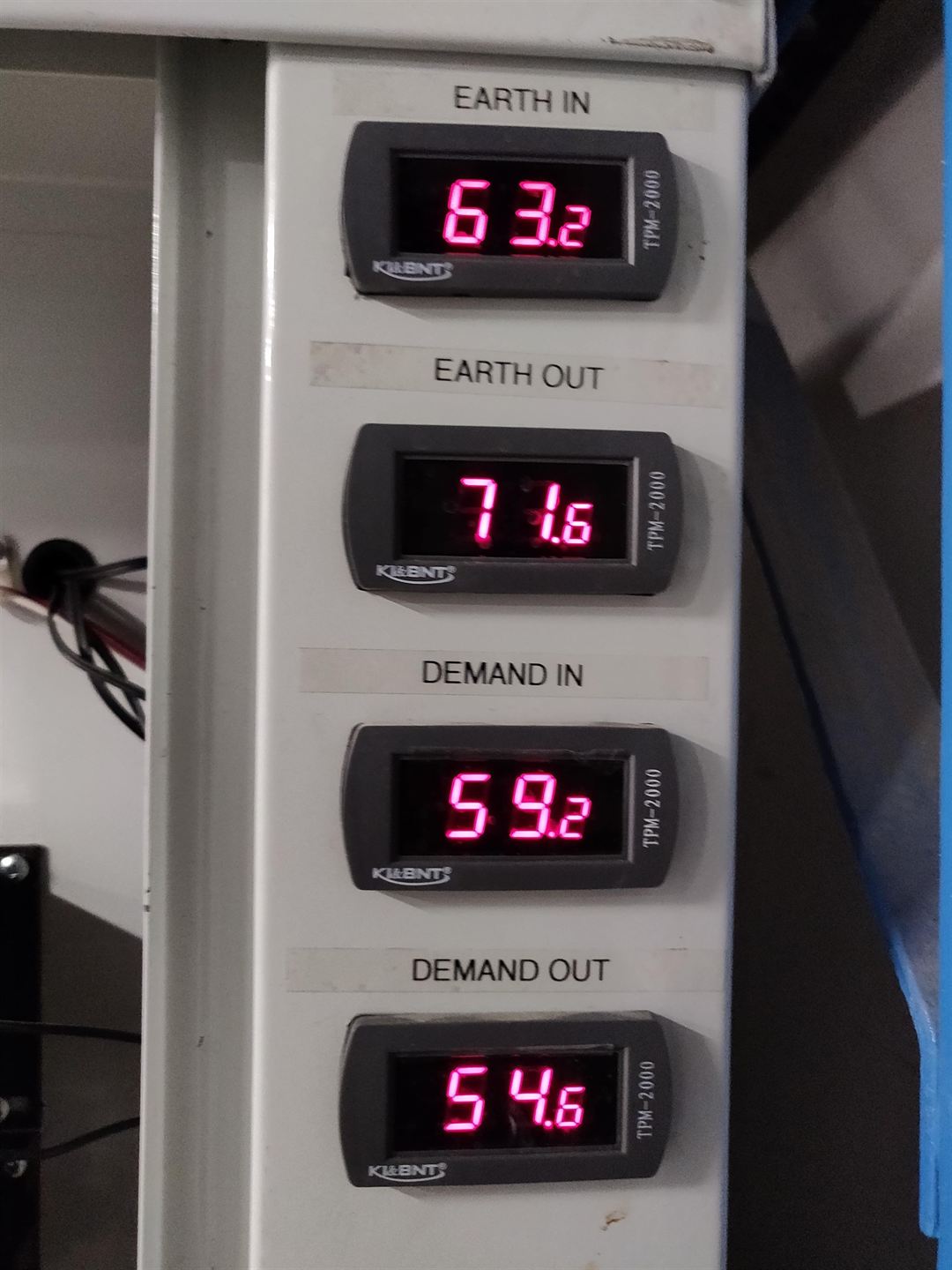
Use a project-specific heating and cooling load assessment, with the intended operating schedule and indoor conditions.
Establish the design temperatures, flow requirements and available source conditions before selecting equipment.
Plan isolation, controls, service clearances and the measurements needed to check operation.
Explore equipment typesA geothermal heat pump exchanges heat with the ground or a body of water through a sealed loop of pipe. Vertical boreholes use the least surface area, horizontal trenches need more open ground, and a lake loop needs suitable water close by. Site conditions and the building’s loads decide which option fits.
Plan the installation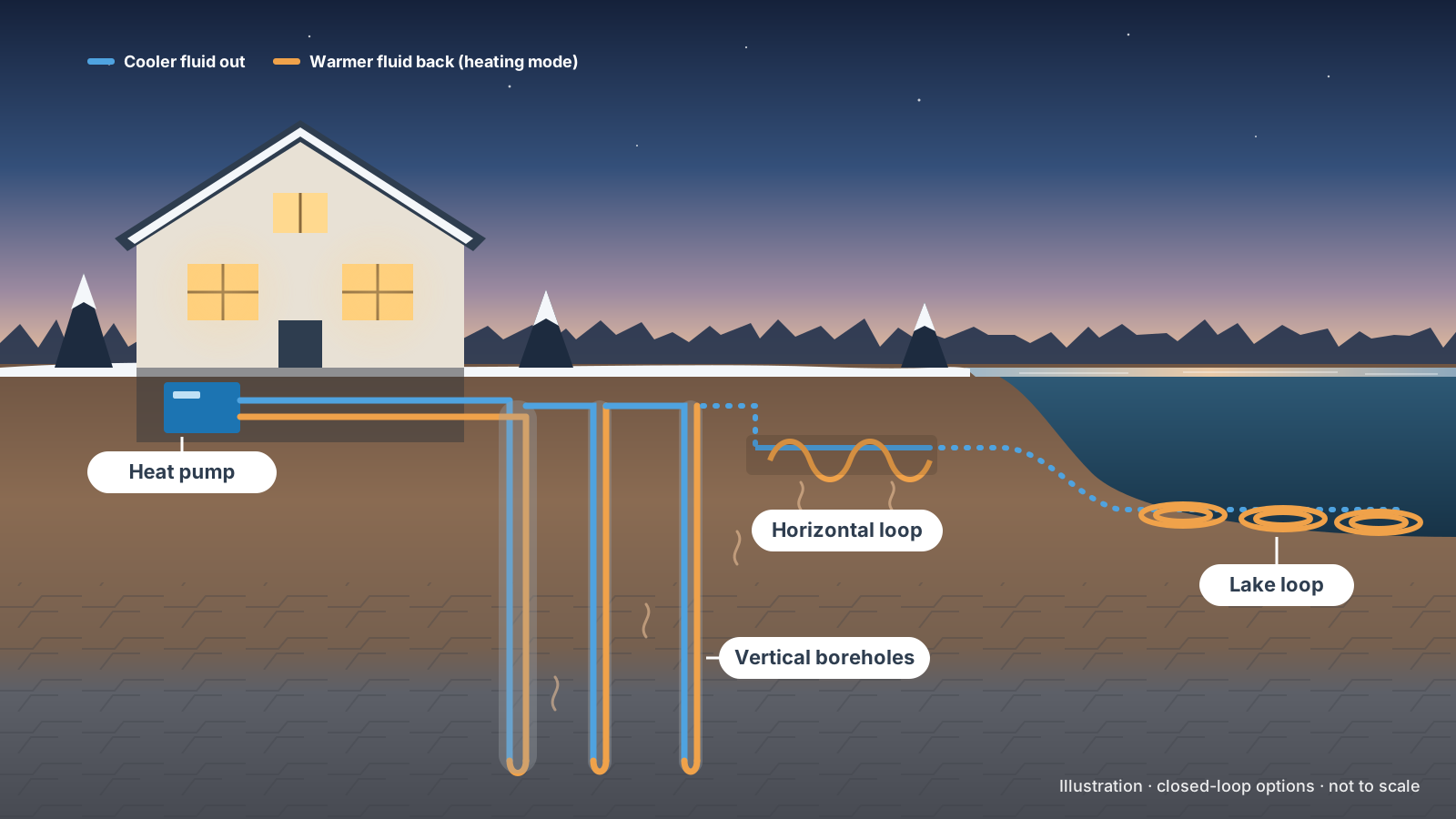
Share your location, current heating and cooling system, and timing.
Discuss your project+1 647 914 8114Three parts: the loop field outside, the pipe that connects it, and the equipment inside.
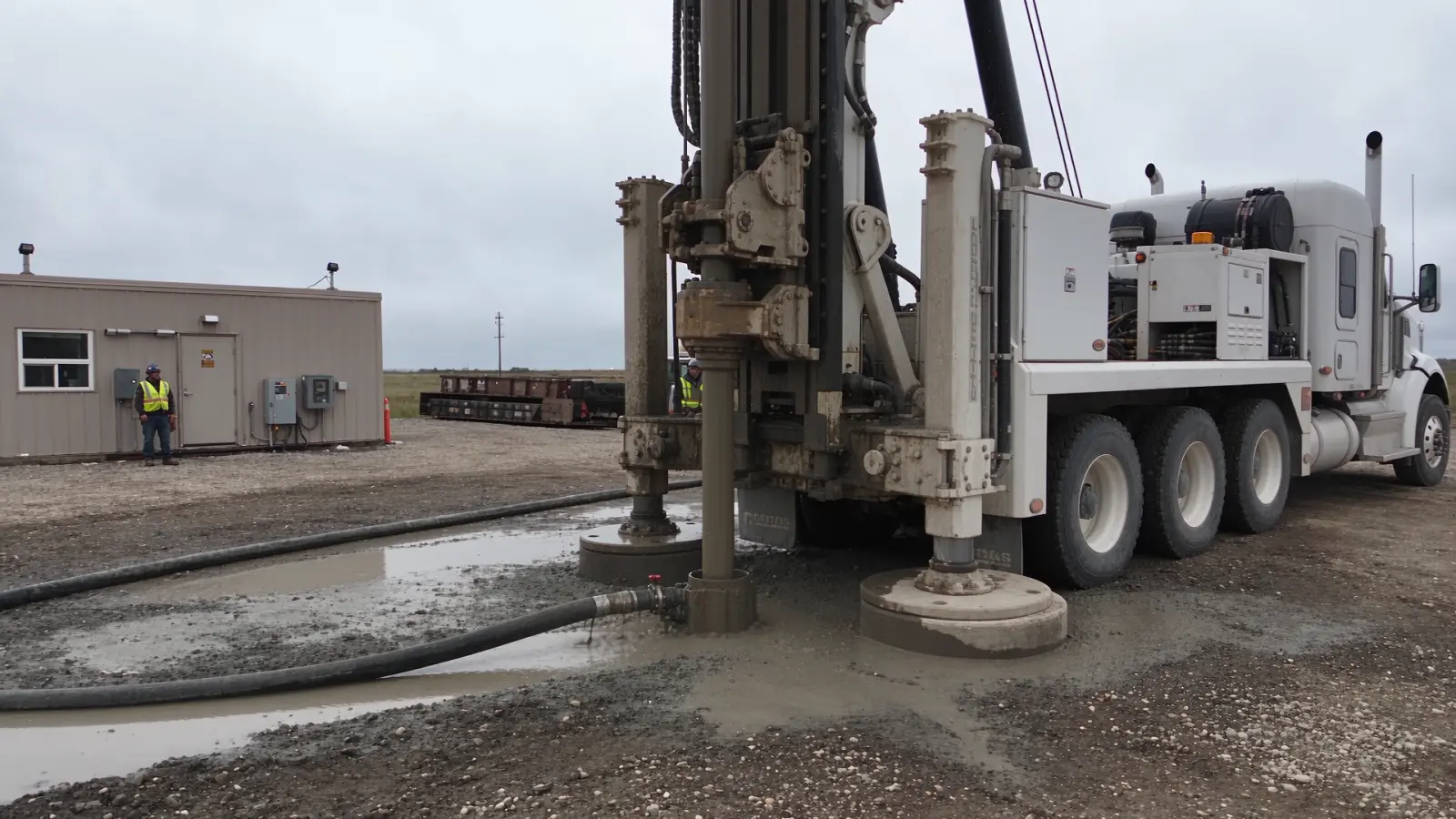
AI-generated illustration.
We look at the ground, the access and the building load first. That decides how many boreholes and how deep, or whether a horizontal or lake loop fits better.
Discuss your siteReview site access, underground services, available ground or water, geology, permissions and the building load. Borehole depth and field size require site-specific design.
Define the source-side pipework, pumping, electrical work, controls, distribution changes and commissioning records. Agree who owns each part of the installation.
Document the current heating system, peak loads, supply-temperature needs, electrical service and workable phasing before deciding what can be retained.